

Core Reason 1: Process Design and Layout Determine the "Ceiling" of Efficiency
This is the most fundamental and far-reaching factor. The stamping efficiency of a product is basically locked in at the die design stage.
Number of forming operations and process sequence: How many stamping operations are needed to form the product directly determines the cycle time per piece. A good design, by accurately calculating the material's limiting deformation coefficients, can minimize the number of forming operations. In some cases, a part that required more than 10 stamping operations can be optimized to fewer operations.
Layout/nesting and material utilization: The layout method (single row, double row, multi-row) not only affects material cost but also indirectly affects feeding stability and stamping rate. Optimizing from a single-row straight layout to a head-to-head double-row layout can increase material utilization from 68% to 82% while reducing downtime caused by feeding problems.
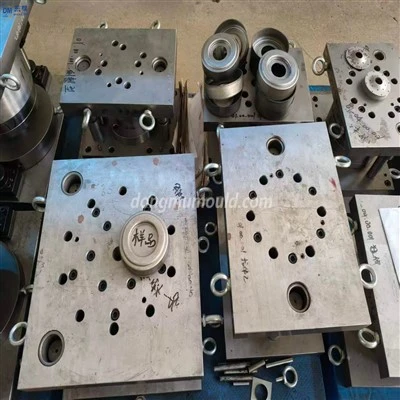
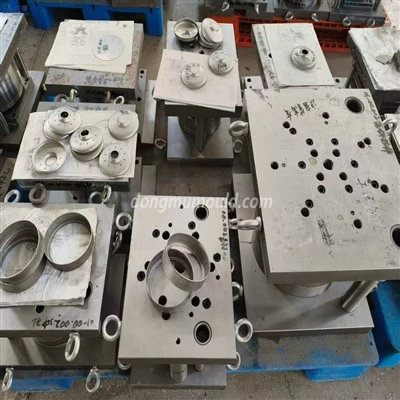
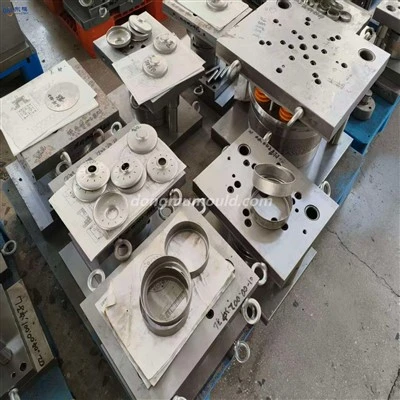
Die structure selection: Choosing a progressive die, compound die, or single-operation die results in huge efficiency differences. Progressive dies are suitable for high-volume production, while single-operation dies are less efficient. In addition, a modularly designed progressive die can reduce die-change downtime to under 20 minutes, whereas a customized die may have downtime of several hours.
Core Reason 2: Die Material, Heat Treatment, and Manufacturing Precision Set the "Physical Limits"
A die is a consumable, and its "constitution" directly determines how fast and how long it can run without problems.
Material and heat treatment: The choice of die steel and the heat treatment process are key to determining wear resistance and toughness. For example, replacing common Cr12MoV with DC53 can increase toughness by about 2 times, significantly reducing the risk of chipping and thus allowing higher stroke rates and longer maintenance intervals. Improper heat treatment, such as too high a quenching temperature, can cause early die failure and directly drag down efficiency.
Surface coating technology: This is an effective means of extending die life and supporting high-speed stamping. For example, applying an AlCrN coating to the punch can increase its stroke life from 500,000 to 1.8 million strokes, an increase of 260%, meaning more parts can be produced between two die repairs and downtime is greatly reduced.
Manufacturing and assembly precision: The punch-die clearance is the "heart" of the die. If the clearance is too small, wear and blanking force increase sharply; if too large, burrs are large and quality is poor. This clearance gradually increases due to wear over the die's life. A case study showed that a die designed with a unilateral clearance of 0.06 mm wore to 0.10 mm after 8 months of use, directly causing yield to fall from 92% to 76%. In addition, the die's guiding precision and assembly quality also directly affect its stability at high speeds.


Core Reason 3: Equipment Matching and Maintenance Systems Determine "Actual Output"
Even with good design and dies, if the "vehicle" does not match or "maintenance" cannot keep up, efficiency will still be greatly reduced.
Rigidity, precision, and matching of stamping equipment: The rigidity and bottom dead center precision of the press greatly affect die life and product quality. A high-rigidity servo press can increase production efficiency by 15%–35% compared with a traditional press. At the same time, die size directly affects equipment speed. Large dies are heavier and have greater inertia, so their stamping frequency is significantly lower than that of small dies-an efficiency difference caused by physical equipment limitations.
Die maintenance and wear management: About 70% of stamping die failures are caused by wear, and the resulting die repair and die change time can account for more than 40% of total downtime. Without preventive maintenance, waiting until the die is "beyond repair" to fix it results in huge lost capacity. Edge wear at critical stations, such as sharp corners where stress is concentrated, occurs earliest and, like dominoes, affects the positioning accuracy of all subsequent stations, causing yield to collapse.
Lubrication and cooling conditions: Good lubrication can significantly reduce friction and wear, while the thermal conductivity of the die material directly affects cooling efficiency in hot stamping. Increasing thermal conductivity by 76% can increase the cooling rate by 48%, thereby speeding up the production cycle.
WhatsApp: +8615930861038
Wechat:+8615930861038/+8618832809957
Email: dongmumold@163.com