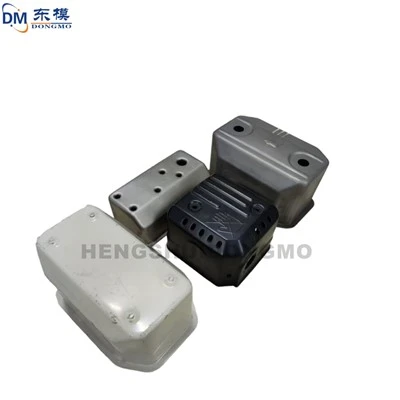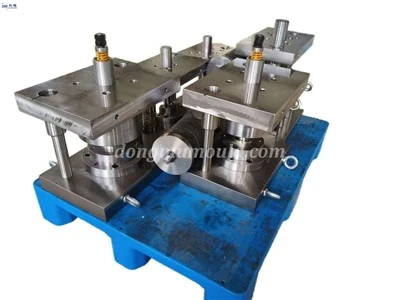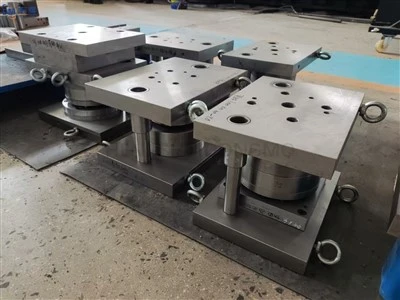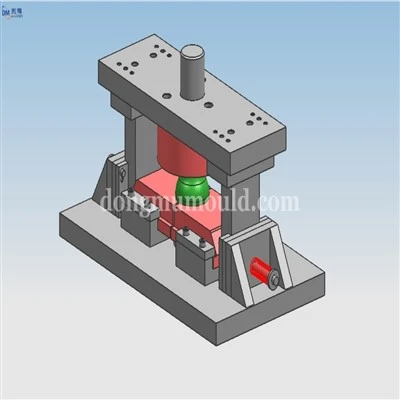

The application of metal deep drawing parts and the learning of deep drawing technology are worth collecting!
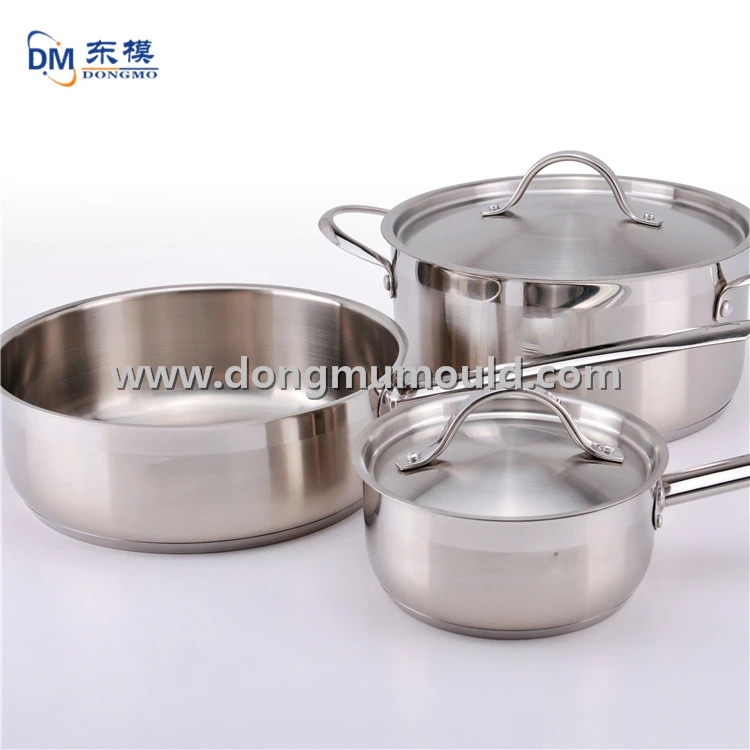
Metal deep drawing parts are widely used in various fields of our life. Deep drawing, also known as drawing, stretching, calendering, etc., refers to the use of a die to punch a certain shape of flat blank obtained after punching into various open hollow parts. Or a machining process in which the diameter of the open hollow blank is reduced and the height is increased. The deep drawing process can be used to manufacture thin-walled parts with irregular shapes such as cylindrical, stepped, conical, spherical, box-shaped, etc. Combined with other stamping and forming processes such as flanging, bulging, flaring, necking, etc., parts with extremely complex shapes can also be manufactured. Therefore, deep drawing occupies a very important position in the production process of automobiles, aircraft, tractors, electrical appliances, instrumentation, electronics and other industrial sectors.
The following Dongmo will introduce the deep drawing process to you
1. The deformation process of deep drawing:
In the deep drawing process, the main characteristic of the deformation process of the material is the flow of the metal. That is, a flat blank is turned into a cylindrical part.
2. Technological analysis of tensile parts:
The adaptability of the drawing part to the drawing process is called the manufacturability of the drawing part.
(1) Shape of metal drawing parts
The structural shape of the metal tensile parts should be simple and symmetrical, and try to avoid sharp shape changes. When the conditions of use allow, the deep-drawn parts should be as axisymmetric as possible.
(2) Height of deep drawing parts
The height of the drawn part has an important influence on the number of drawing and forming quality. Determining a reasonable drawing height is beneficial to reduce the number of drawing times and the number of drawing dies.
(3) Fillet radius of deep drawing parts
Generally speaking, the larger the fillet radius of the deep-drawn part, the better. The radius of the inner fillet between the bottom of the drawing piece and the straight wall is preferably greater than the material thickness; the fillet radius between the convex edge of the drawing piece and the cylinder wall is preferably greater than 2 times the material thickness, which is conducive to forming, otherwise it is necessary to increase the shaping process.
(4) Dimensions of deep-drawn parts
The size of the deep-drawn parts should be marked according to the requirements of use. That is to say, only the inner dimension or only the outer dimension is marked, and both inside and outside cannot be marked at the same time. In addition, the fillet radius of the connection between the cylinder wall and the bottom surface can only be marked as the inner dimension. Considering the uneven change of the material thickness after deep drawing, the material thickness should not be marked on the cylinder wall or the convex edge.
(5) Dimensional accuracy of deep drawing parts
The dimensional accuracy of general cylindrical deep drawing parts can reach IT8~IT10; for general heterosexual parts, it can be 1~2 grades lower. For deep-drawing parts with high precision requirements, it is necessary to increase the shaping process.