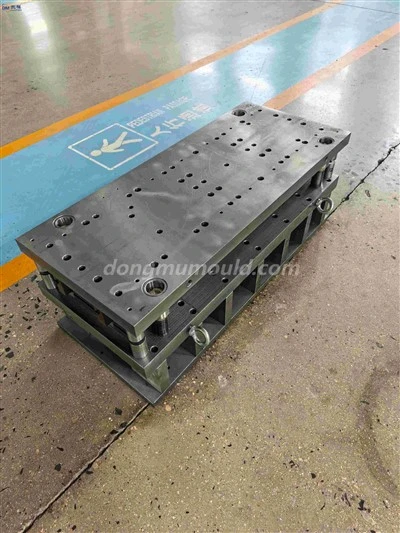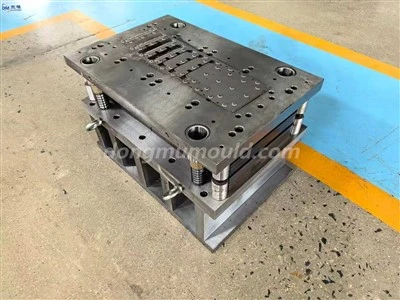

In the process of metal stamping die processing, it is sometimes found that the stamping parts have some burrs of different sizes, which have a certain impact on the product quality. So what are the reasons for the burrs in metal stamping parts, and how to solve these problems? The following is an introduction to Dongfang Mould.

The blade is blunt. Burrs can occur when the cutting edge is worn and blunted or gnawed. The factors that affect the dulling of the cutting edge are:
1. The raw materials and surface treatment of the convex and concave molds are not in good condition, and the wear resistance is poor;
2. The die structure is poor, the rigidity is poor, and the gnawing is formed;
3. If it is not lubricated in time during operation, it will wear quickly;
4. The cutting edge is not sharpened in time.
The gap. Burrs can occur when the blanking gap is too large, too small or uneven. The factors that affect the gaps that are too large, too small or uneven are as follows:
1. Mold manufacturing errors, die parts processing does not conform to the drawings, poor parallelism of the bottom plate, etc.;
2. The mold device is wrong, the gap of the guide part is large, the convex and concave mold device is not concentric, etc.;
3.The accuracy of the press is poor, such as the gap between the guide rails of the press is too large, the parallelism between the bottom surface of the slider and the surface of the worktable is not good, or the straightness of the slider stroke and the tabletop of the press is not good, the rigidity of the worktable is poor, and the Deflection occurs during cutting, which can cause changes in the gap;
4. Installation errors, such as the surface of the upper and lower bottom plates of the die is not cleaned during installation or the fastening method of the upper die of the large die is inappropriate, and the upper and lower die devices of the die are not concentric (especially the die without guide column), which causes the working part to tilt;
5. The structure of the die is unreasonable, the rigidity of the die and the working part is not enough, the punching force is unbalanced, etc.;
6. The curvature of the steel plate is large and the steel plate is uneven.
Improper blanking state
If the contact between the blank (including the intermediate part) and the punch or die is not good, when the trimming and punching with an improper positioning relative height, the workpiece will also be lower than the positioning relative height because the height of the workpiece is lower than the positioning relative height. The shape and the shape of the cutting edge do not conform to each other and burrs occur. metal mold
The craftsmanship of the parts is poor
The sharp corners with protruding or concave shapes are prone to burrs due to excessive wear.
The data does not conform to the process regulations
The thickness of the material is seriously out of tolerance or the wrong material (such as the wrong steel grade) is used to cause the relative gap to be unreasonable and cause burrs to occur in the workpiece.

The solution to the burr problem in the metal stamping process:
1. Consider burrs in product design
In product design, the designer must first know which parts of the product are prone to burrs. Change the design of the part in advance to eliminate the adverse effects of burrs
2. In the process of designing and using the mold, ensure a reasonable gap between the convex and concave molds. When designing the blanking process, it is necessary to combine experience and select a reasonable mold gap according to the material and thickness of the blanking parts. At the same time, certain measures are also taken to reduce the wear of the mold (such as increasing the pressing and ejecting mechanisms, improving the service life of the mold, appropriate lapping, selecting a punch with good rigidity, etc.), which can effectively eliminate and reduce burrs.
3. Ensure the accuracy of mold manufacturing
The mold manufacturing accuracy directly affects the quality of the stamping parts. Low mold accuracy will cause burrs, and the burrs are unevenly distributed. Generally, the working and guiding parts of the blanking die are manufactured according to the precision of IT8~IT7 level. During installation and debugging, the convex and concave dies should be concentric and the gap should be uniform.
4. improve the state of the mold edge
The size of the burr of the stamping part is related to the state of the die edge. The smoother the cutting edge surface, the smaller the burr, that is, increasing the hardness of the die cutting edge and reducing the surface roughness can reduce the burr.
5,.give priority to high-precision and high-speed punch
The punching equipment affects the burr size by its own precision. The increase of the punching speed reduces the friction coefficient and can reduce the wear of the mold; therefore, when the equipment conditions and production conditions allow, high-speed high-precision punching machines and high-precision stamping equipment should be selected.