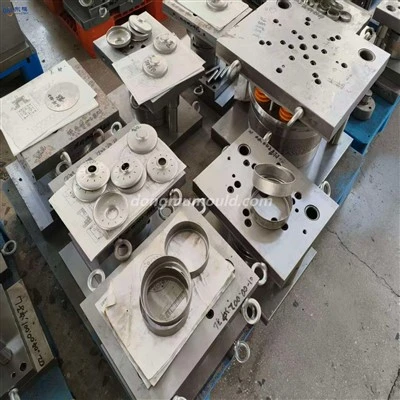

What are the steps of hardware mold processing
In the process of mold processing, it is necessary to follow the prescribed process in order to ensure the accuracy of the mold and product quality. Mold processing is a complex process, in the processing of the process must be accurate.

What are the steps of mold processing?
1. Preparation of die blank: Die blank is mostly metal blank. Take forging processing as an example, the raw material of forging is generally bar, plate and tube. The operator mainly selects according to the specific shape and geometric size of the billet. The blanking of thin slab can adopt ordinary blanking or fine blanking. If you need to forge ring parts, you can also use pipe cutting.
Two, the rough machining of parts: For the rough machining of parts we take milling as an example, as long as the external outline and shape of the parts are given, the processing trajectory can be generated. The arc can be automatically increased at the sharp corner of the track to ensure smooth track and meet the requirements of high-speed machining. Suitable for milling plane and groove. Can choose more contour, multi - island processing.
Third, semi-finishing: semi-finishing stage is the secondary processing of the main surface to prepare for the finish of the main surface.
Four, heat treatment: is a comprehensive process, it is the material placed in a certain medium heating, heat preservation, cooling, by changing the surface or internal structure of the material to control its performance. Heating, insulation, cooling three processes, sometimes only heating, cooling two processes. The two processes are linked and cannot be interrupted.
Five, finishing: processing allowance is less than rough processing, choose the right props for cutting, control the speed of props, pay attention to the size of the material and gloss.
Vi. Cavity surface treatment: Different surface treatment methods of the mold can change the chemical composition, organization and performance of the surface of the mold, so as to greatly improve and improve the surface performance of the mold. Such as hardness, wear resistance, friction, demoulding, heat preservation, high temperature resistance, corrosion resistance, etc. This step is of great significance to improve the quality of the die, greatly reduce the production cost, improve the production efficiency and give full play to the potential of the die material.
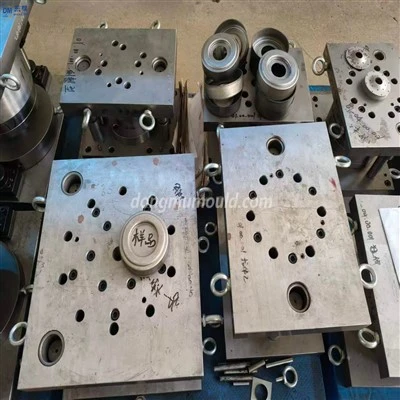
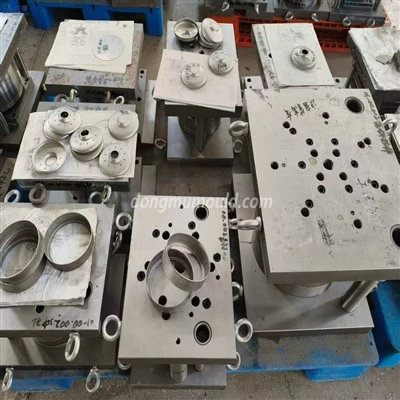
Seven, mold assembly: according to certain specified technical requirements, the parts are assembled into components, and then assembled into parts and even the whole machine. There are two forms of assembly, namely fixed assembly and mobile assembly. Select different assembly methods for mass production.
During assembly, some die parts must be polished and trimmed. The main content of module assembly is to assemble the processed mold parts and standard parts into a complete mold according to the requirements of the general assembly drawing of the mold. After the mold test, it is also necessary to adjust and trim some parts to make the mold produce parts that meet the graphic requirements, and the mold can work normally continuously, so as to complete the mold processing.