
Processing technology and characteristics of thin-walled parts
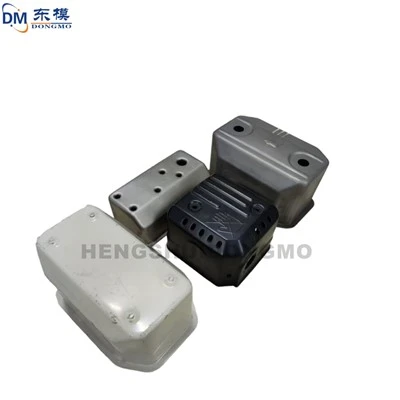
In the processing of parts, the smaller the volume and the thinner the thickness of the part, the higher the processing difficulty, so the processing of thin-walled parts needs to be careful and careful. Next, Dongmo will bring you the processing technology and characteristics of thin-walled parts. I hope you like it.
Thin-walled parts processing technology:
1. The workpiece is divided into rough and fine turning stages
When fine turning, due to the large cutting allowance, the clamping force is slightly larger, and the deformation is correspondingly larger; when fine turning, the clamping force can be slightly smaller, on the one hand, the clamping deformation is small, and on the other hand, the fine turning is still relatively large. Deformation caused by excessive cutting force during rough turning can be eliminated.
2. Reasonable selection of set parameters of props
When fine-turning thin-walled workpieces, the rigidity of the tool holder is high, and the wiper edge of the turning tool is not easy to be too long, generally 0.2-0.3mm, and the cutting edge should be sharp.
3. Increase the clamping contact surface
Use slotted sleeves or some special soft jaws. The contact surface is enlarged, so that the clamping force is evenly distributed on the workpiece, so that the workpiece is not easily deformed when it is clamped.
4. Axial clamping fixture should be used
When turning thin-walled workpieces, the workpiece is axially clamped by the end face of the axial clamping sleeve (threaded sleeve). Because the clamping force is distributed along the axial direction of the workpiece, and the axial rigidity of the workpiece is large, it is not easy to produce clamping deformation.
5. Increase the craft rib
Some thin-walled workpieces are specially made with several process ribs at their clamping parts to enhance the rigidity here, so that the clamping force acts on the process ribs to reduce the deformation of the workpiece. After the processing is completed, the process ribs are removed.
6. Fully pour cutting fluid
By fully pouring cutting fluid, the cutting temperature is reduced and the thermal deformation of the workpiece is reduced.
Features of thin-walled parts technology
1. Due to the thin wall of the workpiece, it is easy to deform under the action of the clamping force. Thus affecting the dimensional accuracy and shape accuracy of the workpiece. Under the action of the clamping force, it will become slightly triangular, but after the car is controlled, it will get a cylindrical hole. When the jaws are released and the workpiece is removed, due to the elastic recovery, the outer circle returns to a cylindrical shape, while the inner hole becomes an arc-shaped triangle. If measured with an inner micrometer, the diameters in all directions are equal, but the deformation is not the inner cylindrical surface, which is called equal diameter deformation.
2. Because the workpiece is thin, the cutting heat will cause thermal deformation of the workpiece, making it difficult to control the size of the workpiece. For thin-walled metal workpieces with a large coefficient of linear expansion, such as continuous semi-finishing and finishing in one installation, the thermal deformation of the workpiece caused by the cutting heat will have a great impact on its dimensional accuracy, and sometimes even make the workpiece Stuck on the jig.
3. Under the action of cutting force, especially radial cutting force, vibration and deformation are easy to occur, which affects the dimensional accuracy, shape, position accuracy and surface roughness of the workpiece.