
Performance requirements of mold steel
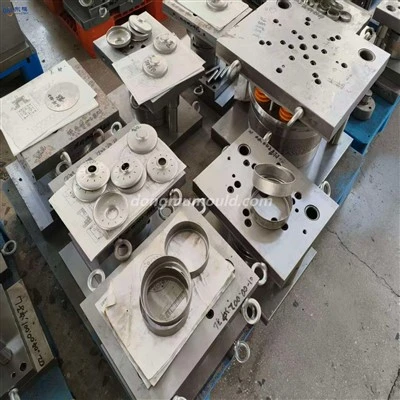
Die steel is the type of steel used to make molds such as cold punching dies, hot forging dies, die-casting dies, etc. Mold materials are the material and technical basis of the mold manufacturing industry. Among them, mold steel is the traditional mold material. Its variety, specification and quality play a decisive role in the performance, service life and manufacturing cycle of the mold. In recent years, the output, production technology, process equipment, quality, and varieties of mold steel at home and abroad have achieved relatively rapid development. The development of mold steel has also promoted industrial products to be advanced, individualized, and high value-added. direction development. The mold has a wide range of uses, and the materials used to make the mold are very wide. The most widely used mold material is the mold steel.

Performance RequirementsEdit Broadcast
1. Annealing process
The spheroidizing annealing temperature range is wide, the annealing hardness is low and the fluctuation range is small, and the spheroidizing rate is high.
2. Forgeability
It has low hot forging deformation resistance, good plasticity, wide forging temperature range, low tendency of forging cracking, cold cracking and precipitation of network carbides.
3. Sensitivity to oxidation and decarburization
When heated at high temperature, it has good anti-oxidation capacity, slow decarburization speed, insensitive to heating medium, and little pitting tendency.
4. Machinability
The cutting amount is large, the tool loss is low, and the machined surface roughness is low.
5. Hardenability
After quenching, a deep hardened layer can be obtained, and it can be hardened with a mild quenching medium.
6. Grindability
The grinding wheel is relatively small in loss, and the amount of grinding without burn limit is large. It is not sensitive to the quality of the grinding wheel and cooling conditions, and it is not easy to cause abrasion and grinding cracks.
7. Hardenability
After quenching, it has uniform and high surface hardness.
Eight, quenching deformation cracking tendency
The volume change of conventional quenching is small, the shape is warped, the distortion is slight, and the tendency of abnormal deformation is low. Conventional quenching has low cracking sensitivity and is insensitive to quenching temperature and workpiece shape.