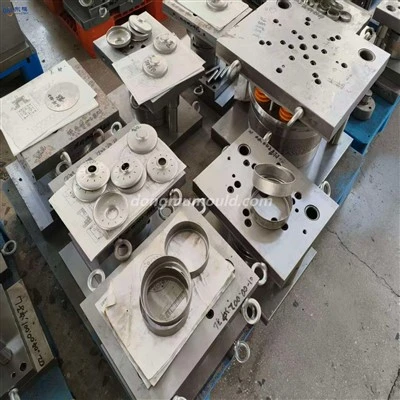

1. Stretching material
When the customer's requirements for the material are not very demanding, and repeated mold trials fail to meet the requirements, you can change to a material with good tensile properties and try again. A good material is half the success. For stretching, it must not be ignored. Cold-rolled thin steel sheets for drawing mainly include 08Al, 08, 08F, 10, 15, and 20 steels, of which the largest amount is 08 steel, which is divided into rimmed steel and killed steel. The price of rimmed steel is low and the surface quality is good. The segregation is more serious and has a tendency of "strain aging". It is not suitable for parts that require high stamping performance and appearance requirements. Killed steel is better, with uniform performance but higher price. The representative brand is aluminum killed steel 08Al. Foreign steel has used Japanese SPCC-SD deep drawing steel, and its tensile properties are better than 08Al.
Second, the surface finish of the mold
When deep drawing is performed, the two sides of the die and the blank holder are not sufficiently polished, especially when drawing stainless steel plates and aluminum plates, drawing scars are more likely to occur, which may lead to tensile fractures in severe cases.
Three, the determination of the size of the blank
More wrinkles and less cracks are our principle. The blank positioning design must be correct. The blank diameter of the rotating body drawing part with simple shape is not thinning. Although the material thickness changes, it is basically very similar to the original thickness. Closeness can be calculated based on the principle that the area of the blank and the area of the stretched part (if trimming must be added) are equal. However, the shape and process of stretched parts are often complicated, and sometimes they need to be thinned and stretched. Although there are many 3D softwares that can perform unfolding calculations, their accuracy cannot meet the requirements of 100%.


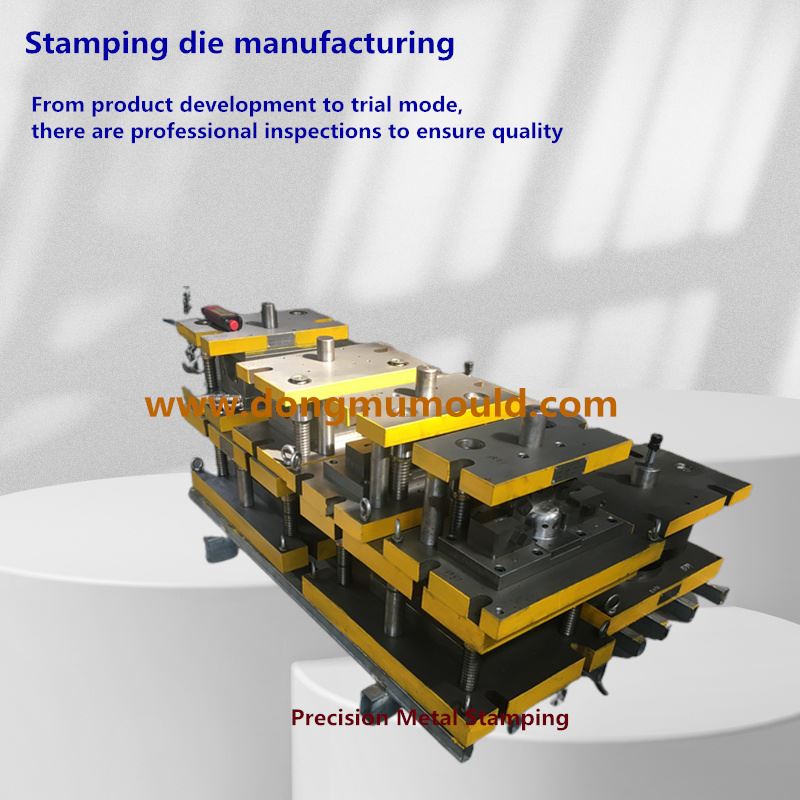
Solution: sample.
A product has to go through multiple processes, and the first process is generally a blanking process. First of all, it is necessary to carry out the calculation of the unfolded material, and have a general understanding of the shape and size of the blank, in order to determine the overall size of the blanking die. Do not process the convex and concave mold size of the blanking mold after the mold design is completed. First use wire cutting to process the blank (when the blank is larger, it can be milled by a milling machine and then clamped). After repeated experiments in the subsequent stretching process, the size of the blank is finally determined, and then the convex and concave molds of the blanking die are processed.
Experience 1
In the inverted process, first try the drawing die, and then process the blanking edge size of the blank, which is half the effort.