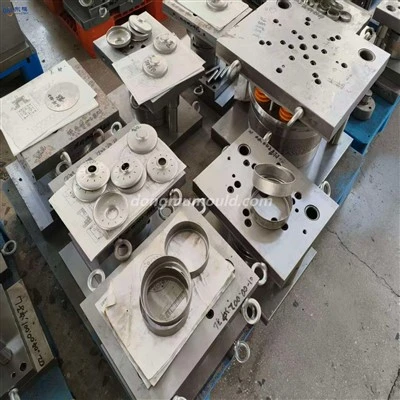

The quality of the stamping parts depends on the factors
1. Mold materials
Die material is one of the most important factors affecting the quality of metal stamping parts. Good processing begins with the right tool, so qualified manufacturers should pay great attention to die materials, heat treatment and other issues.
The material used for stamping dies depends on the type of product and its characteristics. Generally, ordinary steel is used for stamping parts with thin walls and large surface area. But if you need to produce complex parts with high precision and thin walls, P20 steel should be used.
2: Accuracy
The accuracy of the mold determines the smoothness of your parts and what kind of problems will occur after forming and processing. Better accuracy can significantly improve the quality of metal stamping.
When choosing a metal stamping manufacturer, it is necessary to check whether their machines are equipped with advanced testing equipment, such as laser measuring tools, to ensure the accuracy of the mold.
Every good hardware stamping manufacturer should recheck each mold size for errors after heat treatment and surface grinding at least once or twice a year to ensure product quality.
3. Number of stamping parts and stamping parts
The number of times a part is stamped significantly affects its tolerance, so attention must be paid to this problem when selecting a quality metal stamping manufacturer.
For thin-walled parts, it is best to perform several injections after the molding process because fewer secondary operations are required and you can avoid leaving an imprint on the product. However, if used to accentuate the aesthetic appearance of the product, multiple piercings are a good choice.
4. Surface roughness
Surface roughness is the key factor to determine whether your product is smooth and beautiful after forming.
High quality stamping surfaces should be mirror or satin. For many thin-walled parts, a single grinding operation is sufficient to improve surface quality. Multilayer stamped products with multiple punches may require up to three times as much polishing before heat treatment.
5 Heat treatment
Heat treatment is usually done after stamping.
High temperature tempering, quenching and normalizing tempering are common heat treatment processes for metal stamping parts of continuous die. After heat treatment, your parts will be stronger and have better performance.
Heat treatment can significantly improve the quality of metal stamping and help your parts resist deformation, stress and cracking.
However, excessive heat treatment can rapidly reduce the accuracy of the product, resulting in poor surface finish and deformation.