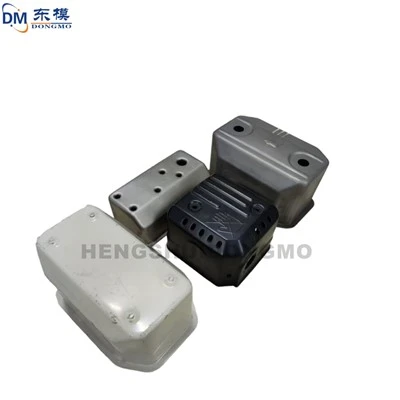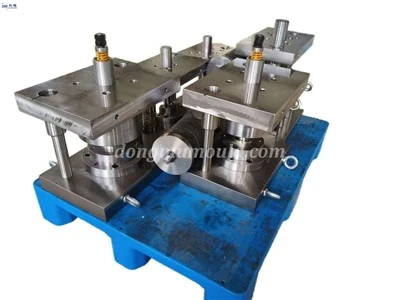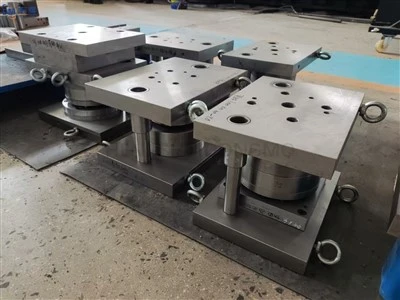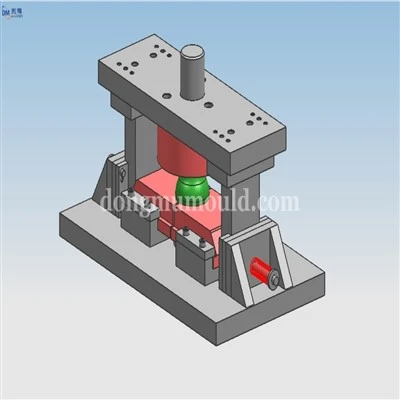

In the stamping production of progressive dies, specific analysis must be done for the stamping defects, and effective countermeasures must be taken to fundamentally solve the problems that occur, so as to reduce production costs and achieve smooth production. The following is the analysis of the causes and treatment countermeasures of the common stamping defects in production as follows for the reference of mold maintenance personnel.
1. Punching parts with raw edges.
(1) Reasons: A. The blade is worn; B. The effect is not obvious after the clearance is too large; C. The blade is chipped; D. The gap is unreasonably shifted up and down or loose; E. The mold is misaligned up and down.
(2) Countermeasures: A. Research the knife edge; B. Control the machining accuracy of the convex and concave die or modify the design gap; C. Research the knife edge; D. Adjust the blanking gap to confirm the wear of the template hole or the processing accuracy of the molded part; E. Replace the guide Pieces or re-molding.
2. Jumping chip crush
(1) Reasons: A. The gap is too large; B. Improper feeding; C. The stamping oil drops too fast and the oil is sticky; D. The mold is not demagnetized; E. The punch is worn and the chips are pressed on the punch; F. The punch is too short and the length of the insert is insufficient; G. The material is hard and the punching shape is simple; H. Emergency measures.
(2) Countermeasures: A. Control the processing accuracy of the convex and concave molds or modify the design gap; B. Trim the material belt and clean the molds in time when sending to the appropriate position; C. Control the amount of stamping oil drops, or change the oil type to reduce the viscosity; D. After training, it must be demagnetized (more attention should be paid to the punching material); E. Research the punch edge; F. Adjust the length of the punch blade into the concave mold; G. Change the material and modify the design. The punch is inserted into the end face to push out or trim a bevel or arc (pay attention to the direction). Reduce the bonding area between the end face of the punch edge and the chip; H. Reduce the sharpness of the die edge, reduce the amount of training on the die edge, and increase the surface roughness (coating) of the straight edge of the die. Use a vacuum cleaner to suck up the waste. Reduce the impulse speed and slow down the chipping.
3. Chip blocking
(1) Reasons: A. The leakage hole is too small; B. The leakage hole is too large, and the scrap material rolls; C. The knife edge is worn and the burrs are large; D. The punching oil drops too fast and the oil is sticky; E. The die is straight The surface of the blade is rough, and the powder sintering adheres to the blade; F. The material is soft; G. Emergency measures.
(2) Countermeasures: A, modify the leakage hole; B, modify the leakage hole; C, trim the knife edge; D, control the amount of dripping oil, change the oil type; E, surface treatment, polishing, pay attention to reducing the surface roughness during processing ; Change the material, F, modify the blanking gap; G, trim the slope or arc on the end face of the punch blade (pay attention to the direction), use a vacuum cleaner, and add air to the blanking hole of the backing plate.
4. Size variation
(1) Reasons: A. The knife edge of the convex and concave die is worn and produces burrs (the shape is too large, the inner hole is too small); B. The design size and clearance are improper, and the processing accuracy is poor; C. The blanking position of the punch and the concave mold insert Equal misalignment, uneven clearance; D, guide pin wear and insufficient pin diameter; E, guide wear; F, improper adjustment of feeder distance, pressure, loosening; G, improper adjustment of mold closing height; H, The pressure level of the stripping insert is worn, and there is no pressure (strong pressure) function (the material pulling and turning over causes the punching to be small); I. The unloading insert is too deep and the punching is too large; J. The mechanical properties of the stamping material vary ( The strength elongation is unstable); K. When punching, the punching force pulls the material and causes dimensional variation.
(2) Countermeasures: A. Research the knife edge; B. Modify the design to control the machining accuracy; C. Adjust its position accuracy and blanking gap; D. Replace the guide pin; E. Replace the guide post and sleeve; F. Re-adjust Feeder; G, readjust the height of the closed mold; H, grind or replace the stripping insert, increase the pressure function, adjust the pressure; I, reduce the depth of the pressure; J, replace the material, control the quality of the feed; K, the punch The end face of the blade is trimmed with a slope or arc (pay attention to the direction) to improve the stress condition during punching. When permitted, the unloading part is located on the unloading block and a guide function is added.
5. Jam
(1) Reasons: A. Improper adjustment of feeding distance, pressing and loosening of the feeder; B. Variation in the feeding distance during production; C. Feeder failure; D. The material is curved, the width is out of tolerance, and the burrs are large; E. Die stamping is abnormal, caused by sickle bend; F. Insufficient hole diameter of the guide material, the upper die pulls the material; G, the bending or tearing position is not smooth up and down; H. The stripping function of the guide plate is set improperly, and the strip is taped ; I. The material is thin, and it warps during feeding; J. The mold is improperly erected, and the vertical deviation from the feeder is large.
(2) Countermeasures: A. Re-adjustment; B. Re-adjustment; C. Adjustment and maintenance; D. Replace material to control the quality of the feed; E. Eliminate the sickle bend of the material belt; F. Research and repair the punching and guiding hole convex and concave die ; G. Adjust the force of the stripping spring, etc.; H. Modify the guide material to prevent the material from being taped; I. Add up and down pressure between the feeder and the mold, and install the upper and lower extrusion safety switches; J. Re-erect the mold.
6. Material belt sickle bend
(1) Reasons: A, punching burrs (especially on the carrier); B, material burrs, no trimming of the mold; C, improper punch depth (too deep or too shallow); D, stamping parts crushing, there are chips in the mold Material; E. Local pressing material is too deep or partially damaged when pressed; F. Mold design.
(2) Countermeasures: A, study the cutting edge; B, change the material, add a trimming device to the mold; C, reset the punch depth; D, clean the mold, solve the problem of chip jumping and crushing; E, check and adjust everyone The height of the stripping and die inserts is correct, and the damage position is researched; F. The adjustment of the whole bending mechanism is adopted.
7. Punch fracture and chipping
(1) Reasons: A, chip jumping, chip blocking, jamming, etc.; B, improper feeding, cutting half of the material; C, insufficient punch strength; D, large and small punches are too close together, and the material is pulled during punching, Causes small punch to break; E. The punch and die are partially too sharp; F. The blanking gap is too small; G. There is no punching oil or the used punching oil is more volatile; H, the punching gap is uneven, Offset, the convex and concave molds interfere; I. The precision of the stripping inserts is poor or worn, and the precision guiding function is lost; J. The mold is not guided and worn; K. The convex and concave mold materials are improperly selected and the hardness is improper; I. The guide material (pin) is worn; m. Improper installation of gaskets.
(2) Countermeasures: A. Solve the problems of chip jumping, chip blockage, jamming, etc.; B. Pay attention to feeding, trim the material belt in time, and clean the mold in time; C. Modify the design to increase the overall strength of the punch and shorten the die Straight blade size, pay attention to the slope or arc on the end of the punch blade, and cut back the small part; D. The length of the small punch is shorter than that of the large punch. E. Modify the design; F. Control the convex and concave Mold processing accuracy or modify the design gap, and the small part of the punching gap should be appropriately increased; G. Adjust the amount of stamping oil drops or change the oil type; H. Check the accuracy of each forming part, and adjust or replace it to control the processing accuracy; I , Training or replacement; J. Replace the guide post and guide sleeve, pay attention to daily maintenance; K, replace the material used, and use the appropriate hardness; I, replace the guide material; m, modify, the number of shims should be as few as possible, and use steel pads , The gasket under the die needs to be cushioned under the cushion block.
8. Bending deformation size variation
(1) Reasons: A. The guide pin is worn and the pin diameter is insufficient; B. The bending guide element is poor in accuracy and wear; C. Bending convexity and die wear (pressure loss); D. Insufficient mold clearance; E. Material slippage, bending convex and concave molds have no guiding function, and no pre-compression is applied during bending; F. The mold structure and design dimensions are poor; G. The punching parts are burrs, causing poor bending; H. Bending There are more gaskets in the punch and concave molds, resulting in unstable dimensions; I. Material thickness and size variation; J. Material mechanical shape and energy variation.
(1) Countermeasures: A, replace the guide pin; B, re-grind or replace; C, re-grind or replace; D, check, modify; E, modify the design, add guiding and pre-compression function; F, modify the design size , Decompose the bending, increase bending shaping, etc.; G. Study the cutting edge of the material position; H. Adjust, use the overall steel pad; I. Change the material to control the quality of the feed; J. Change the material to control the quality of the feed.
9. The height of the punching parts (when one mold has multiple parts)
(2) Reasons: A, burrs of the punching parts; B. The punching parts are crushed, and there are chips in the mold; C, the convex and concave molds (bending positions) are compressed or damaged; D, the material is turned during punching and shearing; E , Wear and pressure loss of relevant material pressing parts; F. Inconsistent tearing dimensions of relevant tearing and cutting positions, and abrasion of the knife edge; G. Inconsistent pre-cutting depths of relevant fragile positions, abrasion or chipping of convex and concave molds; H. Convex and concave of relevant convex parts Die chipping or wear is more serious; I. Die design defects.
(2) Countermeasures: A. Study the cutting edge of the material; B. Clean the mold to solve the problem of chip floating; C. Re-train or replace with new parts; D. Study the punching edge, adjust or add a strong pressure function; E. Check, Perform maintenance or replacement; F. Repair or replace to ensure consistent tearing and cutting conditions; G. Check the pre-cut convex and concave mold conditions, implement maintenance or replacement; H, check the convex and concave mold conditions, implement maintenance or replacement; I, modify Design, add height adjustment or add plastic station.
10. Improper maintenance
(1) Reasons: A. The mold has no fool-proof function, and negligence in the assembly of the mold causes the reverse direction and misalignment (referring to different stations), etc.; B. The insert that has shifted through the gap has not been restored to its original state.
(2) Countermeasures: A. Modify the mold to increase the foolproof function; B. Use methods such as marking on the mold, and make necessary inspections and confirmations against the material belt after the mold is assembled, and make a written record for inquiries.
In the stamping production, the daily maintenance of the mold is very important, that is, daily attention to check whether the stamping machine and the mold are in a normal state, such as the refueling of the stamping oil supply guide. The inspection before the mold is put on the machine, the inspection of the blade, the confirmation of the locking of each part, etc., can avoid many unexpected accidents. When repairing a model, you must first think before doing it, and earnestly record and accumulate experience.