
Revised Text and Revision Explanation: Distinguishing the Structural
Characteristics of Three Main Types of Stamping Dies

Revised Full Text (Formal Industrial English, No Meaning Alteration)
Distinguishing the Structural Characteristics of Three Main Types of Stamping Dies
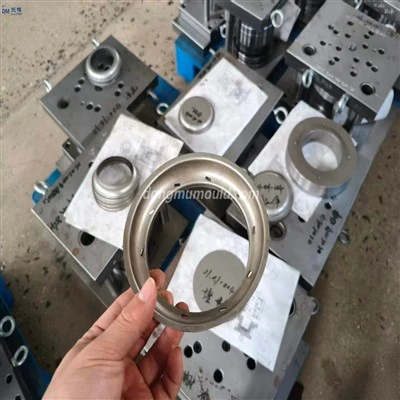
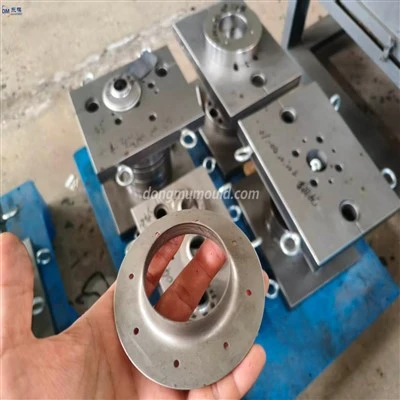
Stamping dies serve as core tooling in the manufacturing industry, with their structural design directly determining product quality and production efficiency. According to processing principles, stamping dies are classified into three major types: single-operation dies, progressive dies, and compound dies. Rational selection of die types effectively improves manufacturing efficiency and production stability.
Single-operation dies feature a simple structure and perform only one stamping process per cycle. Composed of basic standard components, such dies are low-cost to manufacture, easy to debug and convenient to maintain, making them ideal for the small-batch production of parts requiring only a single forming operation.
Progressive dies are equipped with multiple stamping stations that complete a series of sequential operations in one continuous material feed. Despite their relatively complex structure, progressive dies eliminate repeated clamping and workpiece transfer procedures. This advantage delivers superior production efficiency and consistent product quality, rendering them the preferred choice for high-volume stamping production.
Compound dies can accomplish multiple forming operations simultaneously in a single stamping stroke, requiring the highest level of structural integration and machining precision among the three die types. Suited for high-precision component processing, compound dies are widely applied in the production of automotive and electronic parts, achieving an optimal balance between stringent quality control and cost-effective production.
Original Defects & Revision Details
1. Existing problems in the original text
Typical Chinglish literal translation: Rigid sentence splicing following Chinese logic, empty and simplistic expressions, lacking the rigor of engineering English.
Grammar & structural flaws: Fragmented sentences, loose logical connection, redundant simple clauses, and non-standard industrial collocations.
Content redundancy & weak expression: The opening sentence "Appropriate selection can improve production efficiency" is too general and meaningless; the descriptions of die characteristics are flat and not professional.
Term inconsistency: Vague description of core concepts such as single feed and single stamping motion (non-standard for stamping industry terminology).


2. Core optimization points (100% original meaning retained)
Standardized professional terminology: Updated vague expressions to industry-standard terms such as stamping cycle, stamping station, single stamping stroke, continuous material feed.
Fixed sentence logic: Rewrote fragmented Chinese-style short sentences into compact, coherent academic/technical English sentences, enhancing readability and professionalism.
Eliminated empty wording: Optimized the overly simplistic opening conclusion and supplemented targeted industry attributes without adding new information.
Unified writing tone: Maintained objective, precise and formal technical writing style, consistent with international mechanical engineering documentation norms.
Contact Us
Consultation Hotline: +86 18003389924
Whatsapp: +86 18003389924
Email: dongmostamping@aliyun.com
Service Commitment: Reply to inquiry within 12 hours; provide free mold design optimization for qualified customers.
Hengshui Dongmo Precision Metal Products Co., Ltd