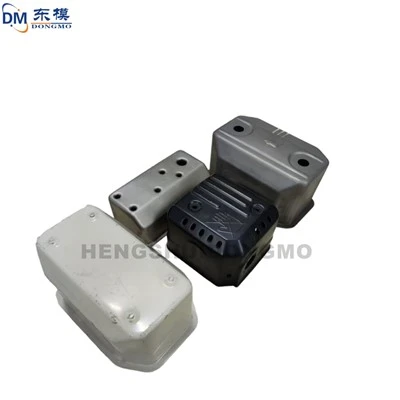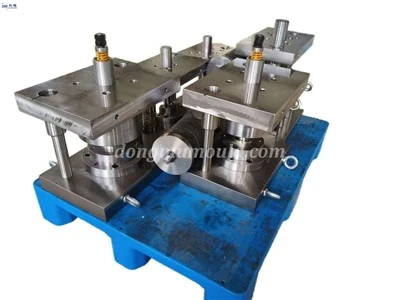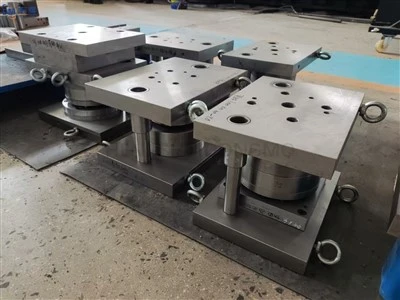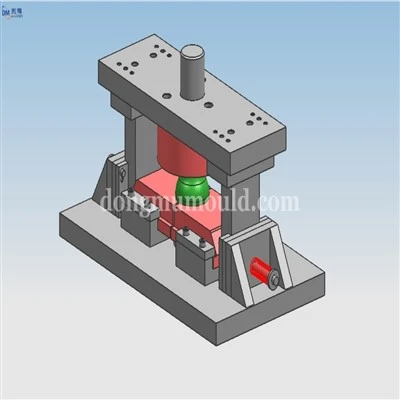

From the perspective of stamping parts processing, the mechanical properties, surface quality and thickness tolerances of stamping materials should meet the following basic requirements:
1. The material used for blanking should have sufficient plasticity and low hardness to improve the quality of the blanking section and dimensional accuracy. Among them, soft materials (such as brass) have good punching performance, hard materials (such as stainless steel, high-carbon steel) have poor punching section quality, and brittle materials are prone to tearing during punching.
2. The material used for bending should have sufficient plasticity, low yield strength, and high elastic modulus. Among them, materials with good plasticity are not easy to bend and crack, and materials with lower yield strength and higher elastic modulus have lower rebound. 3. The material used for deep drawing should have better plasticity, lower yield strength and hardness, and larger plate thickness directivity coefficient. Among them, materials with high hardness are difficult to be deep-drawn; materials with a small yield ratio or a large directional coefficient of plate thickness are easy to be deep-drawn.
4. The surface of the material should be smooth and clean, without scratches, scratches and other defects, so as not to affect the appearance quality of the product, and facilitate stamping processing, welding, spraying and other subsequent processing.
5. The thickness tolerance of the material should meet certain requirements: if the thickness of the material is out of tolerance, it will not only directly affect the stamping quality of the product and the life of the mold, but also produce waste or damage the mold.
After analyzing the process of stamping parts, software can be programmed automatically or manually. After the program is input to the numerical control device, the stepper motor is automatically controlled by the power amplifier to drive the machine tool table and the workpiece to move in the X and Y directions relative to the electrode wire to complete the processing of the plane shape. . While the numerical control device automatically controls the relative motion trajectory between the workpiece and the electrode wire, the detected discharge gap size and discharge status information are fed back to the digital device after frequency conversion to control the feed speed, so that the feed speed and the erosion of the workpiece material The speed is balanced to maintain normal and stable processing.