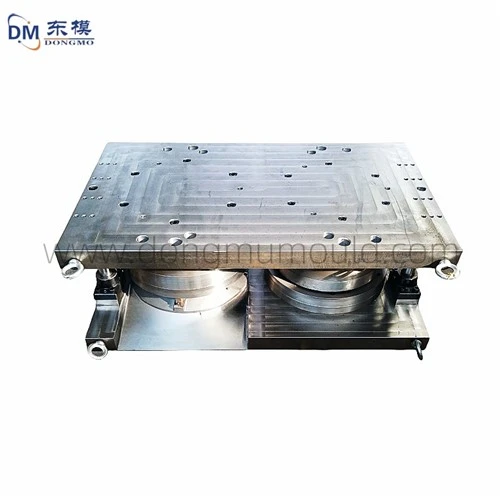


Innovation in mechanical forming and processing technology

I. The Necessity of Innovation in Mechanical Forming Processes
Mechanical forming processes, including forging, stamping, extrusion, and die casting, are crucial for transforming raw materials into high-precision mechanical parts. Traditional processes rely on manual experience for adjustments, resulting in high energy consumption, significant material waste, and insufficient processing accuracy. Faced with the manufacturing industry's increasing demands for product quality and production efficiency, process innovation is imperative. Its core value lies in four aspects:
- Improved Product Quality and Consistency: Optimizing process flows and parameter control significantly improves product dimensional accuracy and performance stability;
- Reduced Costs and Resource Consumption: Reducing material waste and energy consumption, improving material utilization, and practicing green manufacturing;
- Adaptation to Complex Part Manufacturing: Meeting the processing needs of complex-shaped, high-performance parts in high-end equipment fields such as aerospace and automotive;
- Facilitating Intelligent Manufacturing Transformation: Introducing digital and intelligent technologies to improve production automation and flexibility.


II. Core Innovative Technologies in Mechanical Forming Processes
1. Digital Simulation and Process Design Optimization
Utilizing simulation technologies such as Finite Element Analysis (FEA) and Computational Fluid Dynamics (CFD), the processes of metal flow, deformation, and defect generation can be simulated in a virtual environment, allowing for early prediction of forming results and potential problems. Optimizing process parameters through simulation reduces trial and error, shortens development cycles, and lowers R&D costs.
2. Integration of High-Precision CNC Equipment
Modern CNC machine tools and forming equipment, coupled with high-precision sensors, enable real-time data acquisition and feedback control, ensuring processing accuracy and process stability. For example, high-speed stamping machines equipped with force sensors and vibration monitoring devices can automatically adjust process parameters to prevent mold damage and product defects.
3. New Mold Materials and Manufacturing Technologies
Adopting advanced mold steel and surface treatment technologies improves mold wear resistance and service life. Simultaneously, utilizing 3D printing (additive manufacturing) technology allows for the rapid fabrication of complex-shaped mold components, enabling flexible and diverse mold design and significantly shortening the mold development cycle.
4. Intelligent Monitoring and Control System Integrating Internet of Things (IoT) and industrial big data analytics, an intelligent monitoring system is built to monitor equipment operating status and process parameters in real time. Through big data analysis, equipment maintenance cycles and process anomalies are predicted, enabling preventative maintenance and intelligent scheduling to ensure continuous and stable production.

Contact Us
Consultation Hotline: +86 15930861038
Whatsapp: 15930861038
Email: dongfangmould@aliyun.com
Service Commitment: Reply to inquiry within 12 hours; provide free mold design optimization for qualified customers.
Hengshui Dongmo Precision Metal Products Co., Ltd
Hot Tags: custom stainless steel multi-portion basins and kitchen sinks; aluminum alloy stamping molds, China, suppliers, manufacturers, factory, buy, price, made in China, Deep Drawing Die, Round Deep drawing Die, Deep drawing die for special shaped parts, Deep drawing metal forming die, kitchen cabinet hardware accessories, 304 Stainless Steel Deep Drawing Die