

Coordinated Optimization of Die Structure Design and Lubrication Process in Oil-Free Stamping

I. Background and Advantages of Oil-Free Stamping
Oil-free stamping refers to the stamping process that uses no or minimal amounts of traditional lubricating oil. By optimizing process parameters and die structure, workpieces are successfully formed. Its advantages in practical applications are as follows:
1. Environmental Protection and Energy Saving: Lubricating oil consumption is reduced by more than 90% compared to traditional processes, with no waste oil discharge, reducing environmental pollution and meeting green manufacturing standards.
2. Cost Reduction: Eliminating the procurement, storage, and cleaning of lubricants, a single production line can save 50,000-100,000 RMB in lubricant costs annually, reducing manual cleaning costs and improving economic efficiency.
3. Quality Improvement: No lubricant residue on the workpiece surface, surface roughness Ra≤0.8μm, eliminating the need for subsequent cleaning, facilitating subsequent coating and welding, and increasing the finished product qualification rate by 5%-8%.
4. Simplified Process: Eliminating lubricant spraying and recycling processes increases the automation level of the production line, reduces equipment failure rate by 15%, and enhances production continuity.


II. The Key Role of Die Structure Design in Oil-Free Stamping
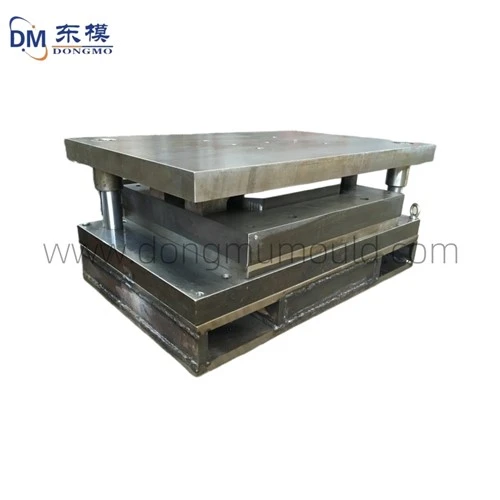
Oil-free stamping lacks lubrication. Die structure optimization is crucial to reduce direct friction between the workpiece and the die, ensuring forming stability. Specific practical methods are as follows:
1. Optimize Die Surface Treatment: Treat the die punches, dies, and cavities with TiN (titanium nitride) or WC (tungsten carbide) coatings. The coating thickness should be 0.005-0.01mm, increasing the surface hardness to HV800 or higher, controlling the coefficient of friction below 0.1, enhancing wear resistance, extending die life by more than 30%, and reducing friction damage between the workpiece and the die.
2. Rationally Design the Forming Area: Use finite element analysis software to simulate stress distribution and material flow during stamping, optimizing the punch, die plate, and guide structure. The punch cutting edge should have a rounded corner of 0.3-0.5mm to reduce localized stress concentration on the workpiece, controlling the rate of material tearing and wrinkling to below 1%.
3. Adjusting Clearance and Closure Method: Based on the workpiece material and thickness, control the mold clearance to 5%-8% of the material thickness, with an error ≤0.005mm; adopt a gradual closure method to avoid sticking caused by instantaneous contact and prevent scratches and damage to the workpiece surface.
4. Enhancing Cooling and Chip Removal System: Design serpentine cooling channels in the mold cavity and mold base, with a diameter of 8-10mm, a channel spacing of 25-30mm, and a distance of 10-12mm from the cavity surface. Use water-based cooling medium with a circulation flow rate of 5-10L/min, controlling the mold operating temperature at 50-70℃ to avoid thermal deformation; design chip removal grooves with a width of 2-3mm and a depth of 1-1.5mm at the mold cutting edge to ensure timely chip removal and maintain mold operating stability.

Contact Us
Consultation Hotline: +86 15930861038
Whatsapp: 15930861038
Email: dongfangmould@aliyun.com
Service Commitment: Reply to inquiry within 12 hours; provide free mold design optimization for qualified customers.
Hengshui Dongmo Precision Metal Products Co., Ltd
Hot Tags: custom sheet metal stamping, metal forming and bending, custom stamping dies, China, suppliers, manufacturers, factory, buy, price, made in China, Precision Stamping Die, sheet metal progressive die, Steel Plate Mould, Square pipe punching die, progressive stamping process, tc wire drawing dies