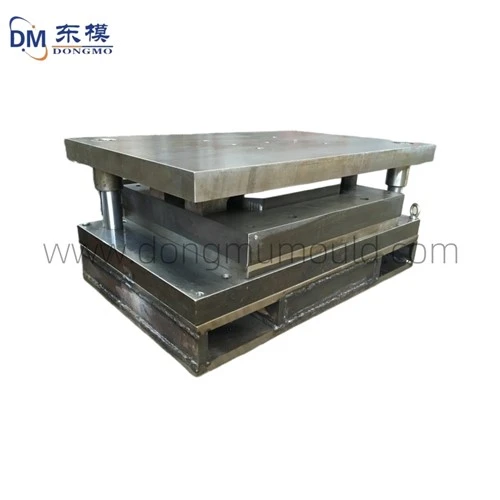


How to Avoid Tolerances and Errors in Metal Stamping Dies

I. Scientific and Reasonable Design
Use CAD software for die structure design and CAE simulation software to simulate material flow and die deformation during the stamping process, predict potential errors, and optimize the structure. The die structure design must ensure rigidity; cast iron or high-strength alloy steel should be used for the die base to prevent deformation during stamping. Dimensional tolerances of key die components should be reduced by 0.01-0.02mm according to the requirements of the stamped parts. The clearance between guide pillars, guide sleeves, and punches/dies should be controlled within 0.005-0.01mm to reduce the accumulation of assembly errors.
II. High-Quality Materials and Precision Machining Process
Prioritize the use of high-quality die steels such as H13, SKD11, and DC53 for the die punches, dies, and die bases, avoiding materials with high impurities and uneven performance. High-precision equipment such as CNC milling machines, wire cutting, and EDM should be used for machining, controlling the machining accuracy within ±0.005mm. After each machining process, a coordinate measuring machine should be used to check the dimensions, and any deviations should be adjusted immediately. Heat treatment employs vacuum quenching followed by deep cryogenic treatment, with the temperature controlled at 1050-1080℃ and held for 2-3 hours to eliminate internal stress in the material and prevent deformation after mold processing.


III. Strict Assembly and Debugging
During mold assembly, dial indicators and feeler gauges are used to check the clearances of each component, ensuring smooth and unobstructed sliding of guide pillars and bushings, and precise alignment of the punch and die. After assembly, trial molding and debugging are performed, stamping 10-20 samples. The dimensions of the stamped parts are checked using a projector and calipers. If deviations are found, the positions of the punch and die, the blank holder force, or the mold clearance are adjusted until the dimensions of the stamped parts meet the design requirements before mass production.
IV. Standardized Maintenance and Management
Before starting the machine each day, check the mold lubrication system and add special grease to ensure sufficient lubrication of moving parts such as guide pillars, bushings, and springs, preventing wear that could lead to dimensional deviations. Establish a mold management ledger to record the number of times molds are used, maintenance time, and wear condition. Every 5000 pieces produced, use a coordinate measuring machine to check the key dimensions of the mold. If wear exceeds tolerances, promptly polish and repair or replace vulnerable parts.


V. Continuous Technological Innovation and Talent Development
Install vibration and temperature sensors on the molds and connect them to an intelligent monitoring system to monitor the mold's operating status in real time. If any abnormality is detected, immediately stop the machine for investigation to prevent errors from escalating. Regularly organize training for technical personnel, focusing on precision mold machining, assembly and debugging, and error detection skills. Only those who pass the assessment are allowed to work, ensuring that operators can accurately control all aspects of mold processing and use, reducing human error.
Contact Us
Consultation Hotline: +86 15930861038
Whatsapp: 15930861038
Email: dongfangmould@aliyun.com
Service Commitment: Reply to inquiry within 12 hours; provide free mold design optimization for qualified customers.
Hengshui Dongmo Precision Metal Products Co., Ltd
Hot Tags: precision metal stamping die manufacturing; progressive metal stamping dies, China, suppliers, manufacturers, factory, buy, price, made in China, progressive stamping process, progressive die stamping process, Multi station Stamping Die, Sound insulation board mould, Steel Plate Mould, Round pipe punching die